This short article is part of our '20 high impact research stories' series. This has been assembled to mark two decades of the City Futures Research Centre 2005-2025. Each of the 20 stories revisits an influential research study completed over those 20 years, linking it with related Centre projects and outcomes. A brochure version of all 20 stories will be published later in 2025.
Understanding the factors influencing a social/affordable housing project’s financial viability in diverse market conditions is an important practical challenge for housing providers and funding agencies, alike. Two CFRC research projects led by Prof Bill Randolph, and also involving Dr Laurence Troy (now at the University of Sydney) and others, have made major contributions in this space by providing practical modelling tools and policy insights to support financially feasible, socially beneficial affordable housing delivery.
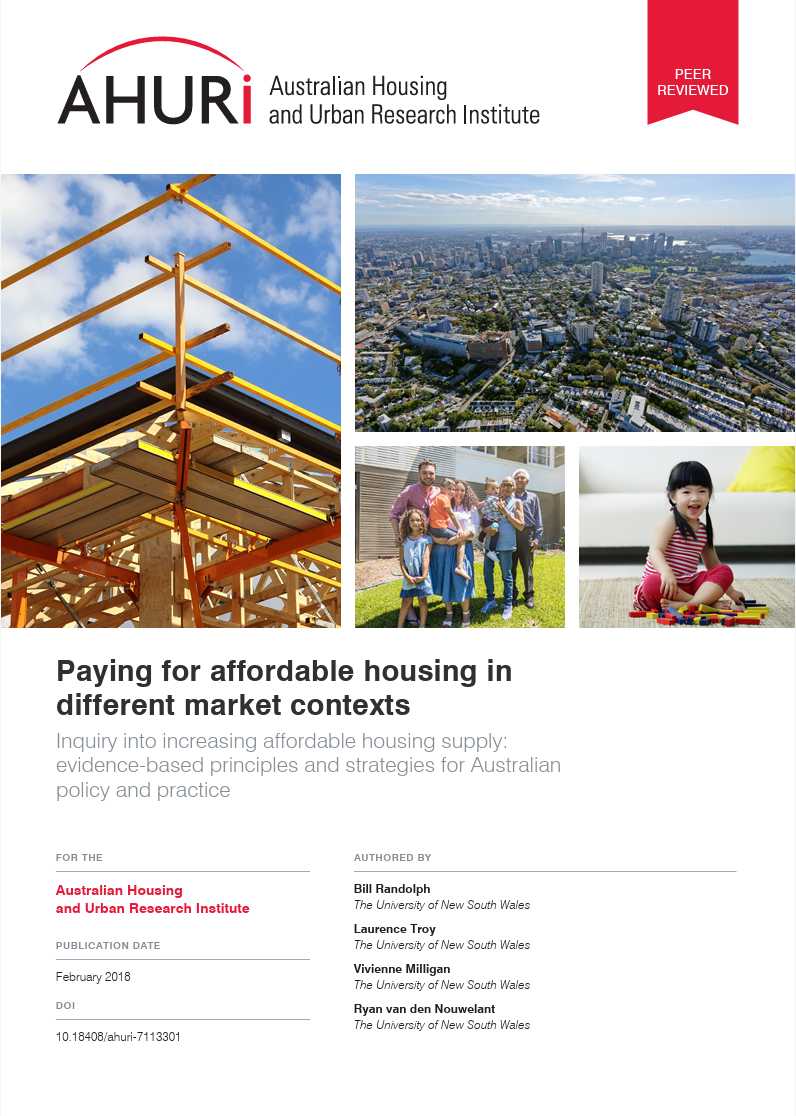
Paying for affordable housing in different market contexts (2018)
This pioneering project analysed six recently completed affordable housing developments across Australia to investigate how project costs, revenues, and subsidies interact in practice. The project informed the development of the Affordable Housing Assessment Tool (AHAT)—a flexible, user-oriented financial modelling tool designed to assess the feasibility of affordable housing projects under a range of policy and market conditions.
The AHAT has proved particularly valuable for policy-makers, who can test the efficacy of various subsidy schemes and financing models, and affordable housing practitioners, who can simulate the financial viability of proposed developments.

Drawing on the real-world data, the research identified six key lessons about financing affordable housing:
- Access to land: Government-facilitated access to land is critical for viability.
- Equity investment: Government equity investment can yield strong returns and feasibility for long-term social housing.
- Subsidy design: A tailored ‘gap funding’ approach is needed to reduce reliance on private debt.
- Mixed-tenure and scale: Combining market and affordable housing and building at scale improves project sustainability.
- Long-term value: Affordable housing should be retained over the long term to maximise public benefit.
- Needs-based modelling: Investment should be guided by long-term social need and viability rather than short-term return.
The AHAT spreadsheet tool allows financial modelling over a 30-year horizon, which reflects the long-term nature of affordable housing and debt payback periods. Importantly, the research made the case that, on cost-effectiveness grounds, public subsidies are best channelled to tax-advantaged not-for-profit (NfP) developers, where profits can be recycled into further social benefit, rather than returned to shareholders.
NfP modelling in large-scale renewal: Waterloo South (2020)
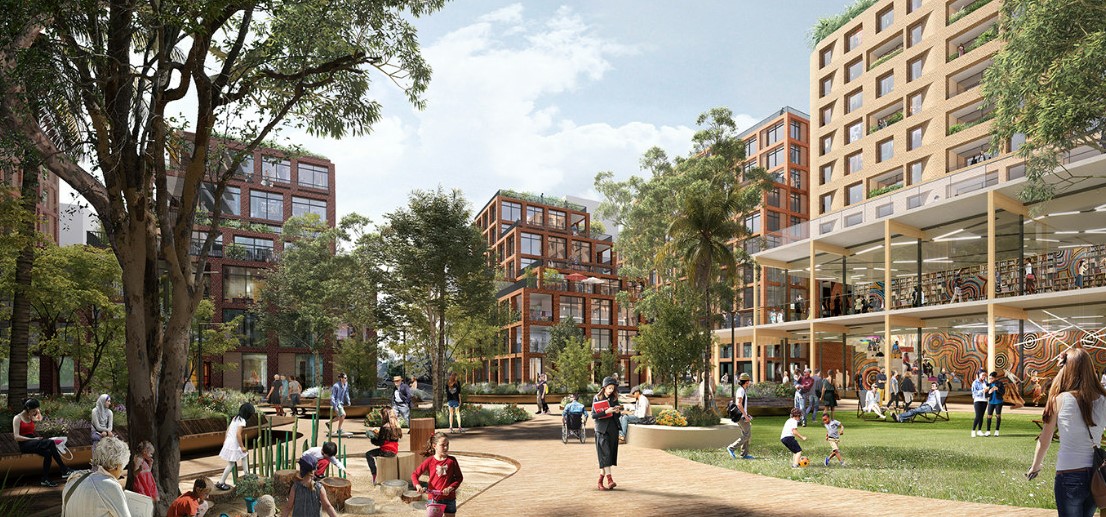
Applying the AHAT approach to a real-world large-scale urban renewal scenario – the Waterloo South Estate Redevelopment – Prof Randolph and Dr Troy modelled the impact of assigning the project to an NfP housing provider rather than a for-profit developer. This exercise informed the CFRC submission to the Waterloo South Independent Expert Advisory Panel established by the NSW Government in 2020. The exercise demonstrated how surpluses from a 50% market housing component could cross-subsidise 50% social and affordable housing, aligning with the City of Sydney’s desired tenure mix.
Key outcomes from the modelling included:
- A $0.849bn uplift in social housing asset value from a $0.626bn land input.
- A further $0.645bn in affordable housing value generated.
- A $0.5bn provision for infrastructure, showing the broader urban benefits.
- Net income-positive status for the NfP developer within two decades, enabling reinvestment.
This modelling reinforced the broader insights from the 2018 study: the critical importance of access to land at a discounted price, long-term horizons, and reinvestment of profits through NfP structures to deliver meaningful, sustainable housing outcomes. Shelter NSW greatly appreciates the work, stating:
Considering minor changes to project variables to guarantee best possible returns to the public, this submission demonstrated the importance of asking the right questions of the right organisations at the right time, … ensuring that major redevelopments are not simply products of market forces but are considered with people in mind, challenging stakeholders to be ambitious in their plans for our communities.
Together, these two studies contributed a robust evidence base and practical tools to reshape the ways that governments, practitioners, and NfP housing providers approach affordable housing development. By making the economics of affordable housing transparent, the AHAT and Waterloo modelling projects empower stakeholders to make better-informed, long-term investment decisions that prioritise social value, financial sustainability, and policy alignment.