This short article is part of our '20 high impact research stories' series. This has been assembled to mark two decades of the City Futures Research Centre 2005-2025. Each of the 20 stories revisits an influential research study completed over those 20 years, linking it with related Centre projects and outcomes. A brochure version of all 20 stories will be published later in 2025.
In an era of deepening housing crisis across Australia, timely and reliable data has never been more essential. Digital tools can unlock insights and improve planning and housing decisions. At the forefront of this national effort is a new generation of data platforms and analytical tools - most notably, the Australian Housing Data Analytics Platform (AHDAP) and the newly launched Housing Analytics Lab (HAL) at UNSW Sydney.
The Australian Housing Data Analytics Platform (AHDAP)
Led by a national consortium of researchers and government partners, AHDAP provides a powerful digital infrastructure to support research and decision-making in housing supply, affordability and diversity. Central to AHDAP is a suite of user-oriented tools that empower policymakers, practitioners and researchers:
-
Affordable Housing Assessment Tool (AHAT): This tool allows users to model housing project viability over a 30-year period based on various cost, subsidy and household mix scenarios. It helps practitioners and policymakers assess the impact of subsidies and align development decisions with affordability goals. Originally developed by Dr Laurence Troy and Professor Bill Randolph, AHAT enables planners to focus on long-term social outcomes rather than short-term yield.
-
Australian Property Market Explorer (APME): A visual analytics platform that cleans and aggregates open property data to explore market trends across Australia. Users can overlay pricing data with other geospatial information to understand spatial dynamics in housing markets.
-
Envision: Developed in collaboration with Swinburne University, Envision enables precinct-level, multi-criteria land suitability analyses. Using GIS data, the tool provides an intuitive interface for planners to evaluate land use potential, reducing weeks of manual analysis into a rapid, interactive process.
-
What If?: This Planning Support System allows users to test alternative urban growth and land use scenarios. Users can input variables like population forecasts or infrastructure availability to assess housing demand and land suitability. The tool is designed for collaborative use, encouraging shared planning among stakeholders. As Prof Pettit explained, “We can explore a range of what-if questions—like accommodating population growth or avoiding areas of flood risk—before committing to policy choices.”
-
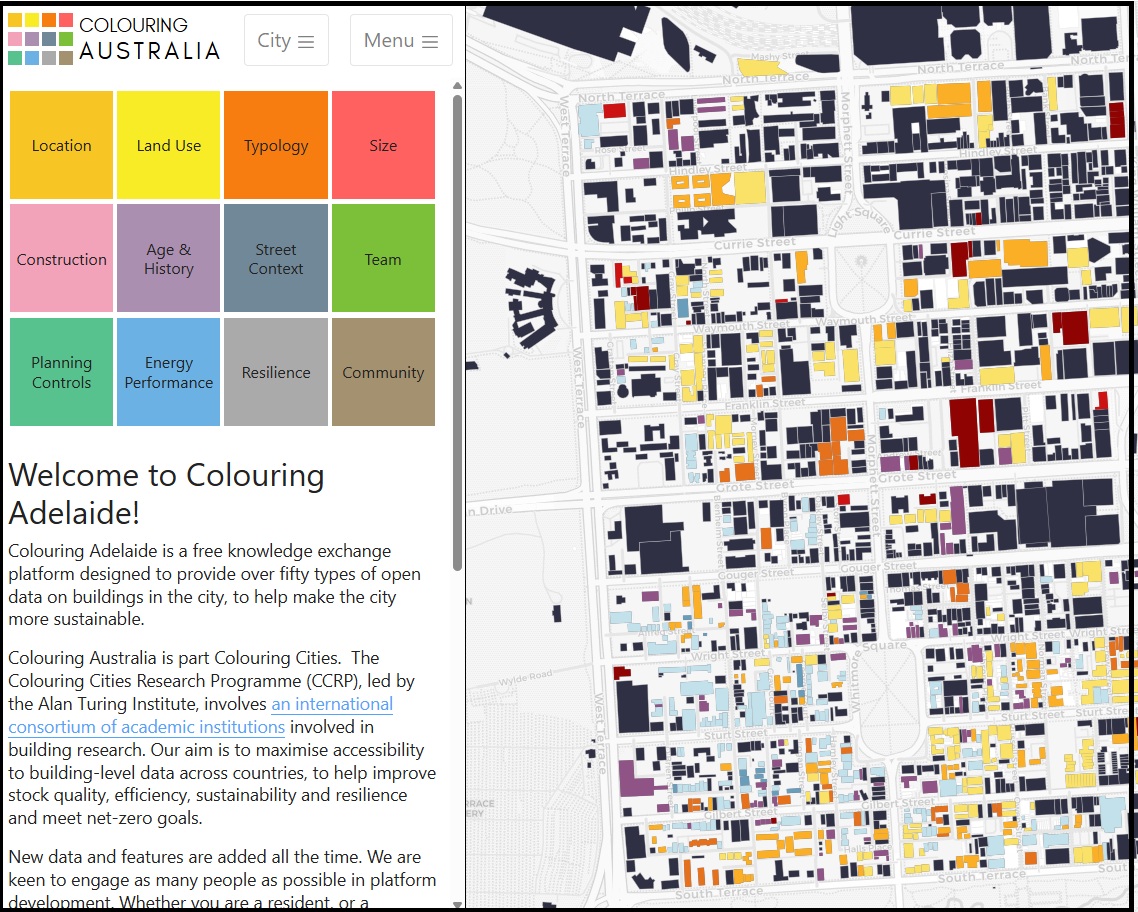
Colouring Australia: As part of the global Colouring Cities Research Programme, this open data platform provides extensive datasets on buildings across five Australian capital cities. It encourages public contributions and fosters a culture of transparency and shared responsibility in urban development.
Housing Analytics Lab (HAL)
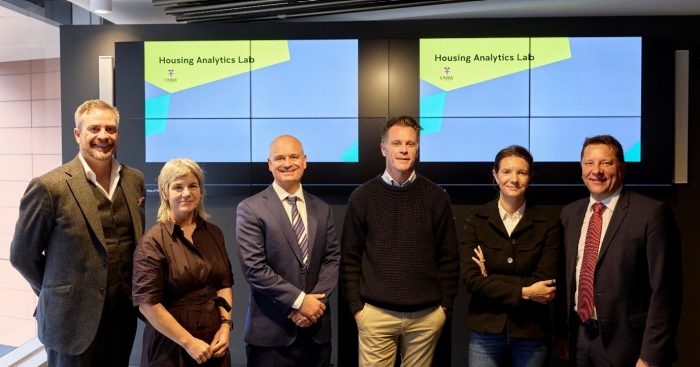
Complementing AHDAP, the Housing Analytics Lab at UNSW Sydney is a state-of-the-art facility designed to further national capacity in housing analytics. Established with a $1 million grant from the NSW Chief Scientist, HAL brings together a coalition of partners including UNSW City Futures', AURIN, ARDC, Commonwealth Bank, Community Housing Industry Association NSW, FrontierSI, Housing Australia, MIRVAC, PEXA, SGS Economics and Planning, Shelter, and Tenants Union NSW.
The Lab houses live dashboards for planning approvals, an AI assistant to ingest and synthesise housing policy research, and interactive maps that reveal everything from housing density around train stations to the spatial turnover of rental properties. It is designed not just as a technical space, but as a collaborative environment for cross-sector problem-solving. NSW Premier Chris Minns at the Lab’s launch said:
“This facility brings together the experts and the data, giving us key insights as we address the housing crisis. We need universities that can translate research into real-world solutions – exactly what UNSW is doing here.”
A platform for the future
Both AHDAP and HAL are critical infrastructure for a more coordinated, data-driven housing system in Australia. They exemplify how digital platforms — when co-designed by researchers, governments, industry and communities — can lead to smarter, more inclusive decisions.
As Professor Attila Brungs, UNSW Vice-Chancellor, put it: “The housing crisis is a complex policy challenge that can only be addressed through genuine collaboration across sectors.”
By enabling shared access to data, interactive tools for scenario testing, and transparent planning processes, these platforms are reshaping the way we think about housing and who gets to be part of the conversation.
These projects were made possible through the combined expertise of researchers at the City Futures Research Centre. Key contributors include Professor Chris Pettit, Dr Balamurugan Soundararaj, Dr Matthew Ng, Professor Hazel Easthope, Professor Bill Randolph, Dr Edgar Liu, Alireza Shamakhy, and Dr Yi Lu. Together, they brought strengths in urban analytics, housing policy, geospatial modelling, and digital platform development - driving the creation of innovative planning and housing decision-support tools at a national scale.