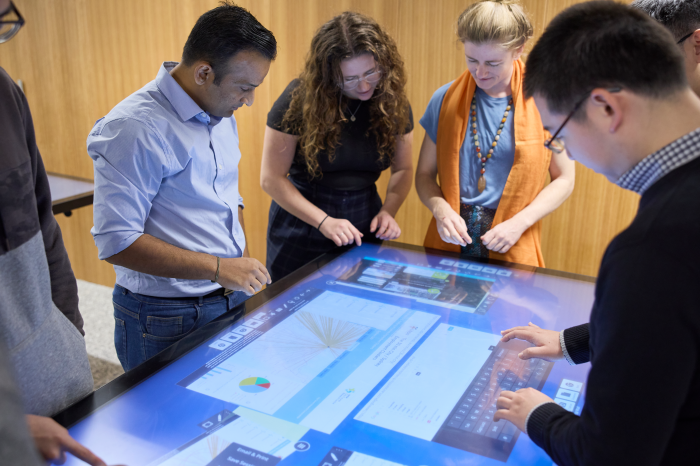
The City Analytics Lab (CAL), located at UNSW’s Anita B Lawrence Centre, is a pioneering facility that brings together research, teaching, and engagement in urban planning and design. Launched in 2018 by the then Minister for Urban Infrastructure and Cities, Paul Fletcher, CAL provides a collaborative environment to support user-centred design and data-driven planning for more sustainable, productive, liveable, and resilient cities. With state-of-the-art facilities including a decision support theatre, immersive VR/AR rooms, a tangible table sandbox, and dedicated observation spaces, CAL is a hub for experimentation, innovation, and cross-sector collaboration. Over 8000 colleagues and guests have visited and used CAL since its inception across 600 events underlining its growing role as a vital part of the City Futures Research Centre’s ecosystem.
Research impact
CAL has established itself as a crucial site for the development and demonstration of leading-edge urban research. It has been instrumental in the development of research projects such as Value Australia, Australian Housing Data Analytics Platform (AHDAP), and Improving the Bikeability of Our Cities where significant engagement with the partner organisation was required. In 2023, City Futures researchers developed and presented a Transit Oriented Development (TOD) Atlas to a high-level policy roundtable that included the NSW Premier, the Minister for Planning and Public Spaces, and other senior ministers. This work, visualised through CAL’s immersive display systems, showcased how spatial data analytics can inform transport investment, land use planning, and housing delivery strategies. These tools along help government and policy leaders evaluate current practices along with scenarios in the future.
In 2024, CAL hosted the Hon. Minister Courtney Houssos in collaboration with Value Australia, providing a platform to present emerging research tools such as MapAI and the newly funded Housing Analytics Lab. These tools are enabling scenario modelling and real-time data exploration for complex planning and housing policy challenges.
CAL is also central to the development of AI-driven platforms such as the Housing Policy Bot. Developed to assist researchers, NGOs, and government, the Bot scans thousands of housing-related policy documents to inform submissions, media releases, and local government strategies.
Teaching impact
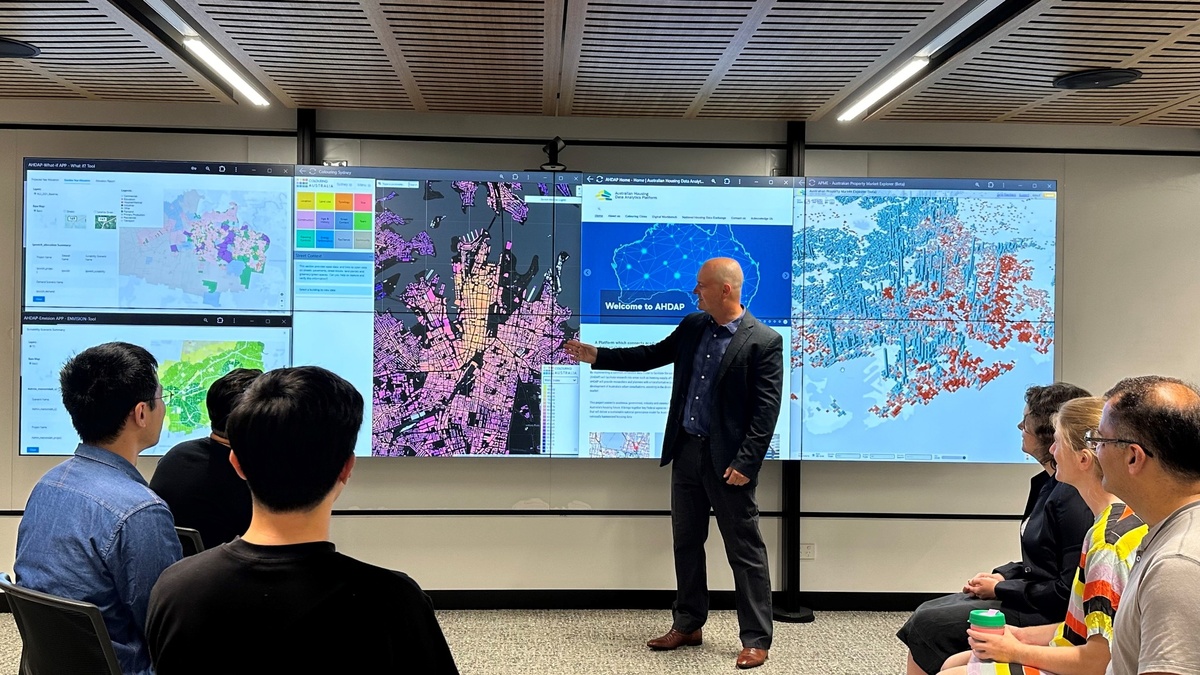
CAL is also being used to train the next generation of urban planners and researchers. As a key resource in the Master of City Analytics, the lab provides students with hands-on experience in digital planning tools, big data analysis, and immersive technologies to conduct effective geo-design that are increasingly essential in professional planning practice.
Dr Matt Ng’s short course Open Data Platforms and Licences for Cities, launched in 2023, uses CAL’s capabilities to teach students and industry professionals how to interact with open data systems, including the AHDAP ‘Colouring Cities’ tool developed with the Alan Turing Institute. This innovative course equips learners with practical skills in data visualisation, cultural heritage mapping, participatory planning, and citizen science—essential knowledge for modern urban governance. In 2022, CAL along with the UNSW’s Parramatta Innovation Hub was also used for Australia New Zealand School of Governance’s (ANZSOG) Executive Fellows Program’s “Parramatta 2050” immersive learning module and played a pivotal role in the design, delivery, and facilitation of the Geo-design case study to a cohort of 50 leaders from public sector across the region
CAL has been part of the showcases for Royal Institute of Chartered Surveyors (RICS) accreditation panel for courses offered by ADA in the years 2022 and 2024. CAL’s involvement in the successful RICS accreditation process highlights how its facilities serve not just academic purposes but also broader institutional goals around professional excellence.
Engagement impact
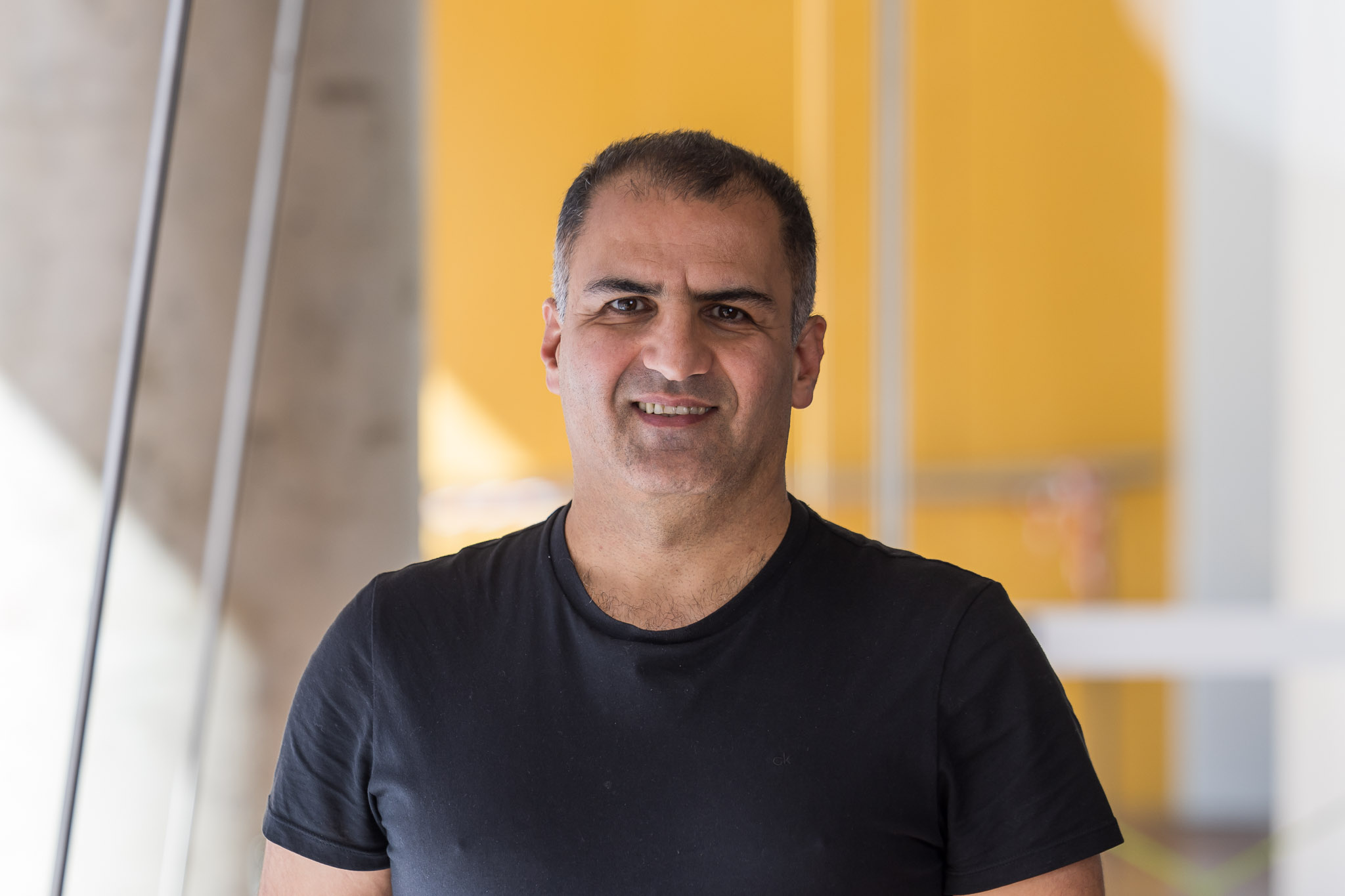
Beyond research and teaching, CAL plays a prominent role in engagement with professional, government, and industry stakeholders. The lab has hosted key visits from national and state leaders, such as the Hon. Minister Courtney Houssos and the Royal Institution of Chartered Surveyors (RICS) panel. CAL has also supported public sector collaboration through major policy engagement activities, such as the housing roundtable with NSW government ministers. It also hosts the City Futures Seminar Series which has had 85 sessions with attendance of approx. 2,500 participants since 2021.
The lab has hosted practitioners from industry such as Jones Lang LaSalle, Commonwealth Bank, PEXA, Deloitte, KPMG and multiple government departments such as Department of Education, Planning, Foreign Affairs. The dignitaries visited the facility includes, NSW Minister for Cities, Ambassador of Vietnam, Chief Commissioner of the Greater Cities Commission. By providing an environment where decision-makers can visualise and interact with planning data, CAL enhances policy dialogues and encourages more transparent and collaborative approaches to complex urban problems.
With its integration of advanced technology, multidisciplinary knowledge, and commitment to real-world outcomes, the City Analytics Lab is making a lasting impact across research, teaching, and engagement, with the aim of driving smarter decisions and better cities.
The City Analytics Lab is powered by a dedicated team of contributors. Mr Alireza Shamakhy manages the lab’s daily operations, while Prof Christopher Pettit provides strategic direction as Director of City Futures. Ms Georgia Wigan supports with bookings and event set-up, and Dr Balamurugan Soundararaj, former Manager, continues to deliver demonstrations and engagement activities.