This short article is part of our '20 high impact research stories' series. This has been assembled to mark two decades of the City Futures Research Centre 2005-2025. Each of the 20 stories revisits an influential research study completed over those 20 years, linking it with related Centre projects and outcomes. A brochure version of all 20 stories will be published later in 2025.
Championing family-friendly apartments
Despite a growing number of families living in apartments, urban policy and the development industry have largely overlooked their needs. For nearly two decades, City Futures Research Centre has been at the forefront of research advocating for family-friendly high-density housing.
Back in 2011 CFRC research warned that child-blind design and planning could undermine the success of the compact city ideal.
Today, challenges persist—spatial constraints, poor acoustic design, limited play space and over regulation, and a lack of family-oriented infrastructure in surrounding neighbourhoods. These kinds of issues lead families to question their ability to raise families in apartments, long-term, with implications for the social and economic fabric of our cities.
Driving policy change
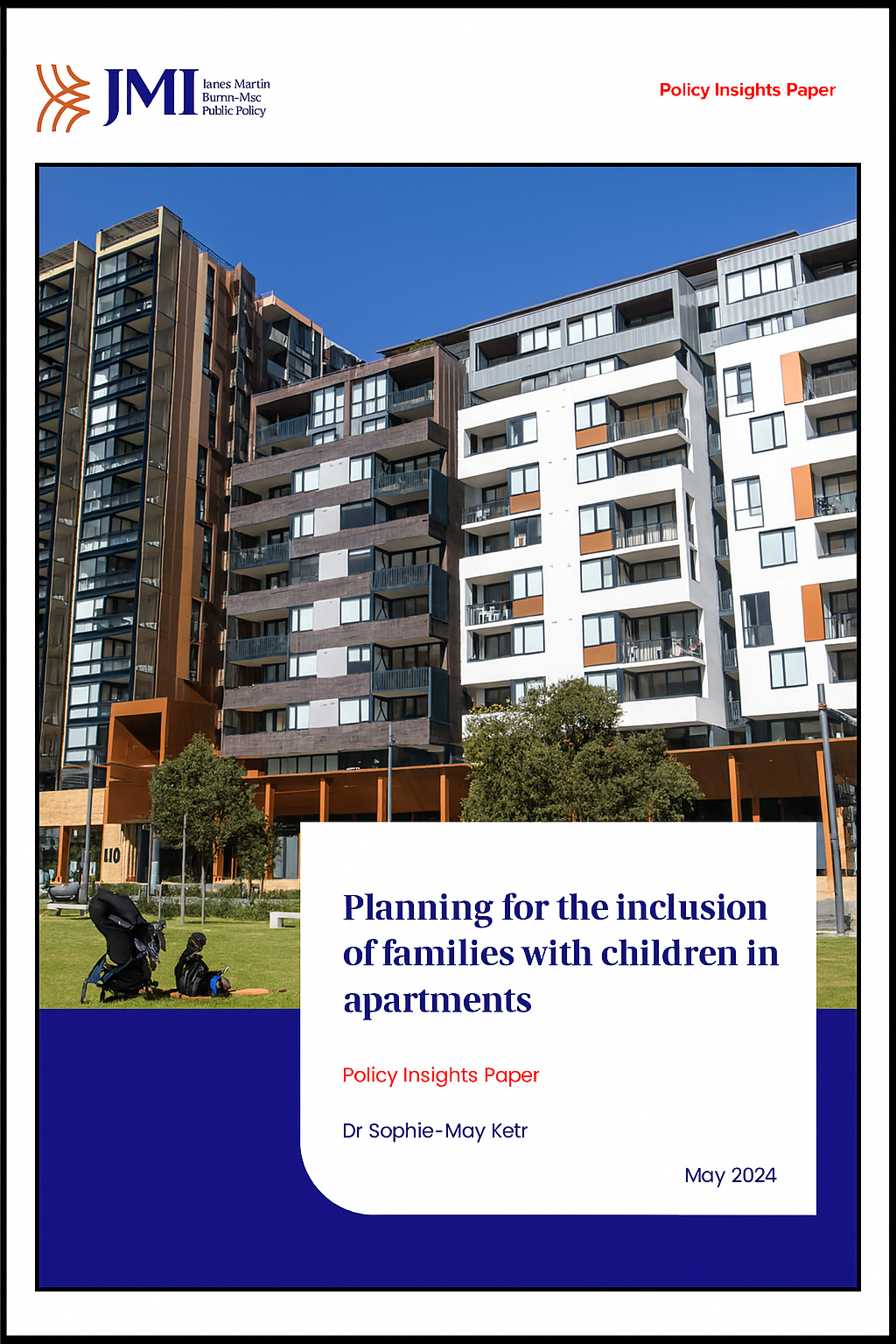
Building on the Centre’s huge body of apartment living research, Dr Sophie-May Kerr (Research Fellow), has played a key role in recently advancing this agenda. Her 2024 Policy Insights paper, Planning for the inclusion of families with children in apartments, outlines critical policy reforms to better attune apartment design to family needs.
The report was cited in a speech by NSW Minister for Planning and Public Spaces, Paul Scully, and recognised by the Committee for Sydney as ‘excellent research’.
This research was also instrumental in influencing the NSW Parliamentary commitment to investigate planning levers for delivering more family-friendly apartments. Several CFRC staff presented evidence at the Parliamentary Inquiry on the Development of the Transit Oriented Development Program, leading to the recommendation that “the NSW Government investigate measures to encourage the delivery of family-friendly apartments as part of its housing reforms”.
Collaborative advocacy
Momentum on this interdisciplinary challenge continues to build. In 2024, Western Sydney Local Health District’s (WSLHD) Health Promotion team, in collaboration with City of Parramatta and Cities for Play, launched the Healthy Higher Density Living for Families with Children - An Advocacy, Planning and Design Guide —an evidence-based guide providing practical strategies for designing family-friendly apartments and neighbourhoods.
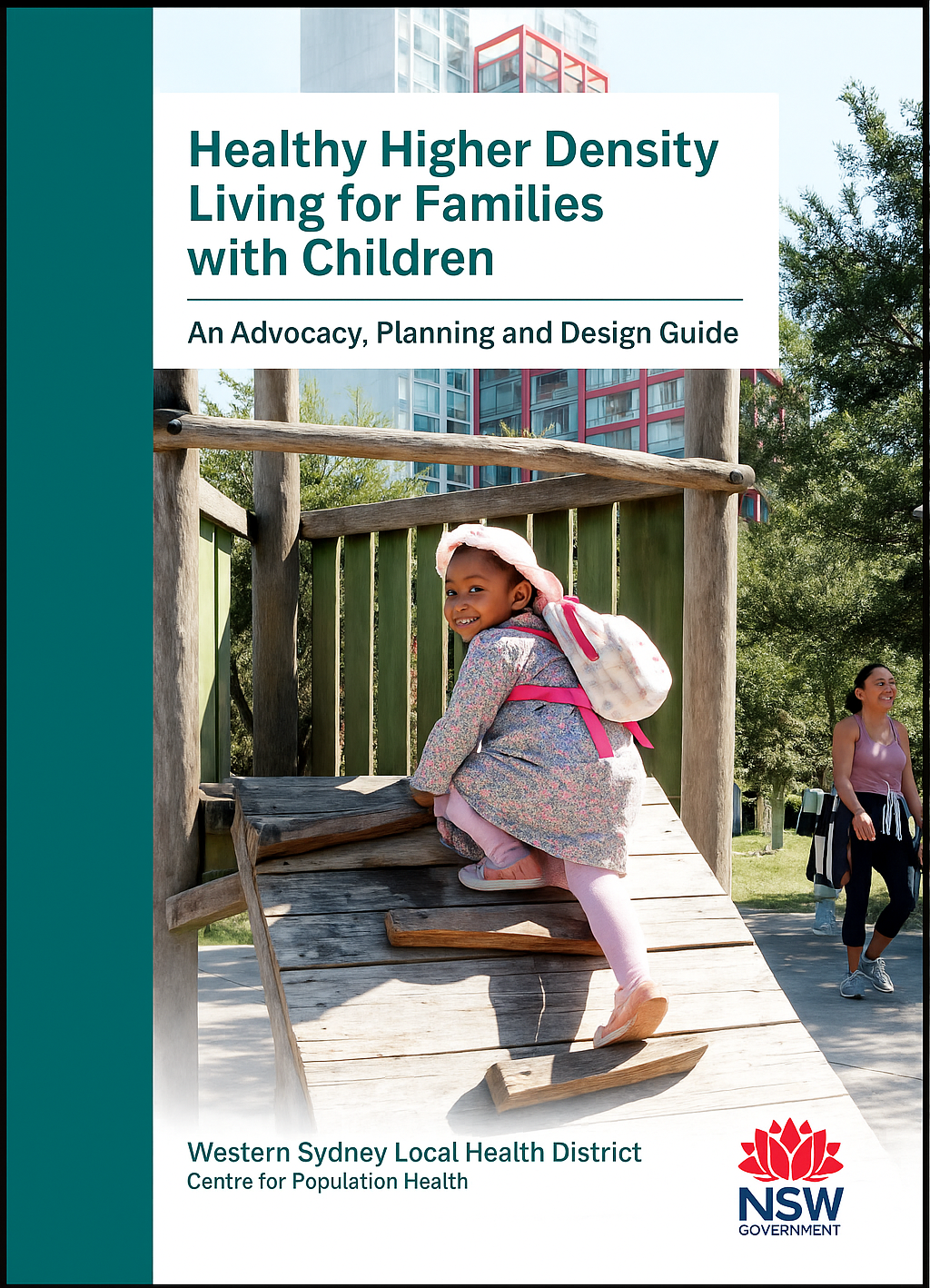
Dr Kerr provided expert feedback on the draft guide, spoke at its launch, and presented at a Planning Institute of Australia webinar, reinforcing CFRC’s thought-leadership in this space.
Michelle Nolan, Director of Health Promotion at WSLHD sees clear value in partnering with the City Futures Research Centre (CFRC) to advance healthier urban environments:
"Collaborating with the CFRC has been invaluable; linking us with evidence-based research on how the built environment impacts health outcomes, providing us with evaluation support and a platform to further advocate on this important issue".
For WSLHD, the issue of family-friendly apartment living is not just about housing—it’s a matter of public health. As Catherine Bateman, A/Director Centre for Population Health put it:
"This topic matters, because the housing and neighbourhoods we live in impact our health and a child's early development. With increasing rates of families with children living in high-density housing, we need to plan and design environments that enable children to thrive, physically, emotionally and socially".
Looking ahead
With more people living in apartments across life stages, failing to design for families will have long-term consequences.
CFRC remains committed to shaping urban policies that ensure apartments support family life to strengthen the liveability and sustainability of our cities.