The Australian population is ageing, with one in six Australians aged 65 or over in 2019, projected to increase to more than one in five by 2066 (ABS Cat 3101.0; ABS Cat 3222.0). How this population will be housed is of growing official concern, as current demographic and housing system trends will pose major policy challenges (Productivity Commission 2015; Eslake 2017). The historic expectation of full home ownership in retirement is being disrupted: ownership rates are declining in the 45-64 age group approaching retirement, and in the low-income 65+ group (Daley & Coates 2018). Amongst those who do retire as homeowners, an increasing proportion are doing so with mortgage debt unpaid (Ong et al. 2019). Among Australia’s growing population of long-term private renters (Pawson, et al 2017) some of those approaching retirement possess superannuation savings and other assets. But the distribution of such assets varies hugely and many – particularly women – will retire with insufficient funds to purchase or rent in conventional housing markets (ABS 2019; Clare, 2017; Daley & Coates 2018). In the mainstream private rental market, there is a deepening deficit of properties affordable to lower income renters: a shortfall of 212,000 properties in 2016, representing a deterioration of 53% over the decade (Hulse et al. 2019). Social housing currently accommodates about half of all renters aged 65+ (Daley & Coates 2018), but will likely continue the long-term decline that has shrunk both the sector’s share of the housing stock, and the number of new tenancies allocated annually: each down by one-third since 1991 (Pawson et al. 2020). Consequently, there is no prospect of sector capacity to absorb growing numbers of older low-income non-homeowners going forward.
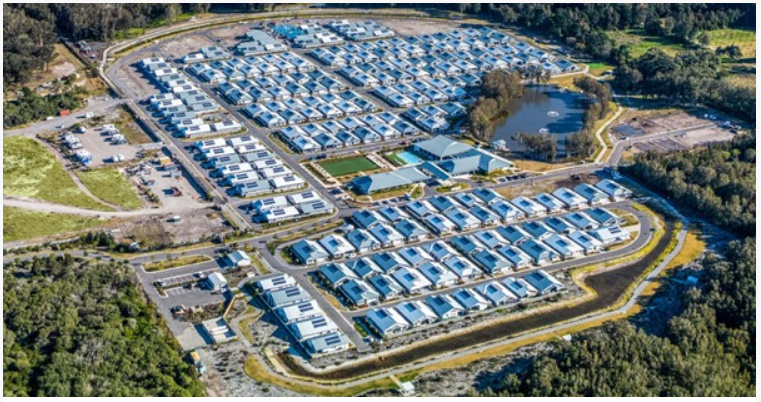
On these trends, more older Australians will be looking beyond conventional ownership and rental models for their post-retirement housing. One already well-known option is the retirement village model. These are regulated under specific legislation in each state and territory (Hu, et al, 2017) and subject to growing critical attention and political interest (Smeed, 2018; Latimer, 2017; Four Corners, 2017). Aside from these already well-articulated critiques, however, retirement villages do not suit the needs or financial capacity of all. Two alternative ‘older persons housing’ options, as yet largely overlooked in research and policy, are residential parks (including manufactured home estates and land-lease communities) (hereafter parks and communities, or PCs) and rental villages (RVs). In the former, residents typically own their dwelling – a van, mobile home or manufactured dwelling – but rent the serviced site on which it sits. The latter are housing complexes in which residents rent their dwelling and may receive other services, e.g. meals, from the housing provider. Both sectors have operated at a low profile for decades, providing relatively low-cost housing for older people.
At the 2016 Census, the most recent data available, some 71,000 persons Australia-wide usually resided on a ‘caravan/residential park’ or a ‘manufactured home estate’. More than half recorded that they owned their dwelling and rented its site, while about a quarter reported renting both dwelling and site. The large remaining ‘unstated’ group indicates the sector’s uneasy tenure categorisation. Almost two-thirds of PC residents were aged 55+, while half were outside the labour force. More than 20% of sector residents were in areas in the most disadvantaged decile of the ABS Socio-Economic Indexes for Areas (SEIFA), while more than half were in ‘lowest three decile’ areas (ABS 2018). On these figures, the population of the PC sector is more than one-third that of the (much more well-known) retirement villages sector, and about one-tenth that of mainstream social housing. It, nevertheless, evokes far less attention among housing researchers and policymakers. The Census may also under-enumerate PC residents: the NSW statutory park register counts almost 35,000 residents, 60% more than the Census figure for that state. Residents of RVs, meanwhile, are not distinguished from mainstream private renters in the Census. They have been almost completely overlooked in housing policy and research.
As post-retirement housing needs become more pressing, their potential significance is growing – but PCs and RVs are now being transformed in ways that create uncertainty about their ongoing housing market role. Both are attracting growing interest from large corporate investors intent on introducing new business models and housing offers.
These changes in the PC and RV sectors have multiple, but as yet unexamined, implications for older persons’ housing opportunities, and will be the focus of this project. The wider backdrop of rising housing affordability pressures affecting older Australians suggests that contemporary changes in the PCRV sectors call for new analytical approaches to understand the associated dynamics and their socio-economic implications. We, therefore, propose to explore these developments through the conceptual lens of ‘financialisation’, interpreted as ‘the increasing dominance of financial actors, markets, practices, measurements, and narratives’ in contemporary economic and social life (Aalbers 2016). Recent developments in the PC and RV sectors appear to exemplify housing financialisation in Australia and internationally; notably the rise of large corporate landlords (Pawson et al. 2019; Nethercote 2019; Martin et al. 2018) and the remaking by finance of individuals’ relations to housing as an asset, a consumption good, and place of emotional attachment (Morris et al. 2017; Smith 2008). More particularly, developments in the PC and RV sectors are symptomatic of the under-explored financialisation of older age; ageing here seen as a vector of specific income flows and liabilities that individuals must manage and from which global capital may profit.
The focus proposed for this project is threefold: the changes experienced in the sectors’ systemic roles and local market impacts, the strategies and operations of long-term proprietors and new investors in the sector, and the everyday lives of PC and RV residents. By developing new conceptual frameworks for understanding the dynamics of these neglected sectors of the housing market, the project will build a new evidence base for scholarship and policymaking, shedding light on the place of PCs and RVs in local housing markets and in the institutional dynamics of the wider Australian housing system.