This short article is part of our '20 high impact research stories' series. This has been assembled to mark two decades of the City Futures Research Centre 2005-2025. Each of the 20 stories revisits an influential research study completed over those 20 years, linking it with related Centre projects and outcomes. A brochure version of all 20 stories will be published later in 2025.
The renewal of social housing estates has long been a focal point of housing policy in NSW, and since inception 20 years ago, CFRC has played a central role in documenting, analysing, and evaluating these efforts. A series of innovative projects in the early years of the centre helped Prof Simon Pinnegar, Prof Kristian Ruming and Dr Edgar Liu cement this expertise to help guide the evaluation of neighbourhood renewal policy and practice with a focus on people-first outcomes.

An ARC Linkage, MOSAIC (Measurement of Social and Asset Investments in Communities) (2006-2009), developed a mixed-method research framework where tenant experience, alongside measuring and tracking social and economic indicators – as was vogue in policy circles at the time – to help guide estate renewal considerations. Much of this thinking was put into practice through the evaluation of Housing NSW’s Building Stronger Communities initiative, led by CFRC in partnership with UNSW’s Social Policy Research Centre (2008-2012), which sought to provide a whole-of-government, place-based approach targeting housing, education, employment support, service coordination, and community engagement across 22 social housing estates in seven localities across the state.
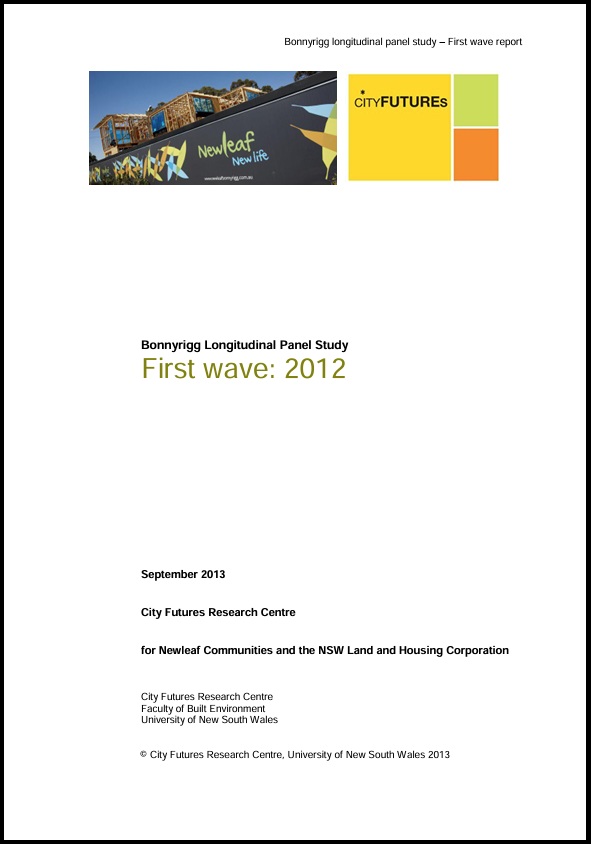
Insights from both projects underpinned the centre’s flagship study of resident outcomes tied to the renewal of Bonnyrigg in SW Sydney (2010-2017). As NSW’s first housing Public Private Partnership (PPP) with the full redevelopment of the estate originally envisaged over 18 stages and 13 years, our longitudinal approach sought to capture resident perspectives and outcomes over time. Interviews, often in people’s homes and conducted in their language of home, provided a rich people-focused understanding of complex urban renewal project delivery. As well as tenants rehomed as development stages were completed, the research also covered those relocated away from Bonnyrigg , and new private housing residents moving onto the rebranded estate.
A focus on tenant experience also underpinned the CFRC team’s multi-year evaluation tracing the redevelopment of Riverwood North, also in Sydney’s southwest (2014-2023). Collectively, these studies offered critical insights into the layered experiences of renewal—how people adapt, reconfigure community ties, and navigate transformed neighbourhoods. Both reinforced the critical importance of communication, transparency, and tenant support throughout the renewal process.
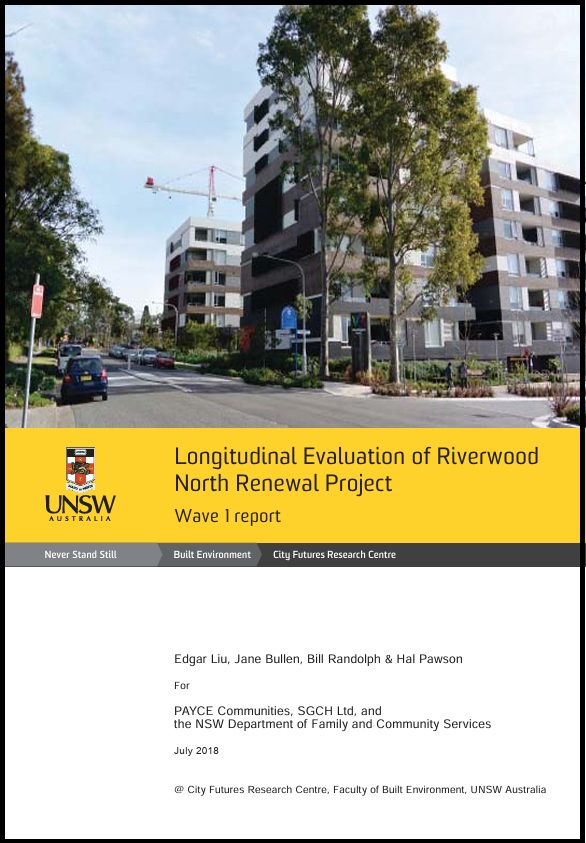
Across this work, a rich evidence base of resident stories, of lives impacted, and housing experiences transformed over time emerged: thousands of surveys undertaken, hundreds of in-depth interviews conducted, and a commitment to ensuring a full diversity of voices were heard. As Mike Allen, a longstanding former Chief Executive of Housing NSW (2006-2014), has reflected:
"The redevelopment of large-scale public housing estates has been a challenging issue for govt’s and housing authorities across the country for the past 20 years. Beyond the practical and cost demands of property redevelopment opportunities, balancing the needs of current and future residents in these areas is both crucial and complex. Taking an evidence-based approach to past experience is the only answer, and the value of independent focused evaluation by thoughtful researchers cannot be overstated. City Futures Research Centre has been an exemplar in this field."
City Futures’ research undoubtedly provided crucial learnings that fed back into policy thinking and approaches, notably around tenant disruption, displacement, and wellbeing during the redevelopment process. A focus on people, and their everyday lives in these studies provided an important counterpoint at a time when Government interest in estate renewal increasingly shifted towards a focus on the ‘asset’ represented by the land upon which estates sit more so than the tenants, their homes and communities they represented.
By the era of the property-led Communities Plus Program in the late 2010s, when social housing estates became sites for economic feasibility-driven high-density, mixed-tenure redevelopment, those learnings felt somewhat diminished: a poignant reminder that evidence needs a receptive audience to have an impact. This difficult translation between research insight and program delivery was captured in the AHURI research study Evaluation and learning in public housing urban renewal (2021) which unpacked how policymakers learn, and apply that learning. Capturing the shift from people-focused outcomes to financial feasibility calculations, the study raises critical questions about how research gets cut through, and how the voices of those most impacted get heard at the place-policy-research interface.