This short article is part of our '20 high impact research stories' series. This has been assembled to mark two decades of the City Futures Research Centre 2005-2025. Each of the 20 stories revisits an influential research study completed over those 20 years, linking it with related Centre projects and outcomes. A brochure version of all 20 stories will be published later in 2025.
As the City Futures Research Centre celebrates its twentieth anniversary in 2025, we are revisiting high-impact projects that have shaped urban policy and practice. One of the Centre’s most influential research areas has been the Healthy Built Environments Program (HBEP), led by Prof Susan Thompson. For more than a decade, HBEP has been at the forefront of integrating health considerations into urban planning and design, providing critical evidence to inform policy, professional practice, and city-making strategies.

Building professional capacity
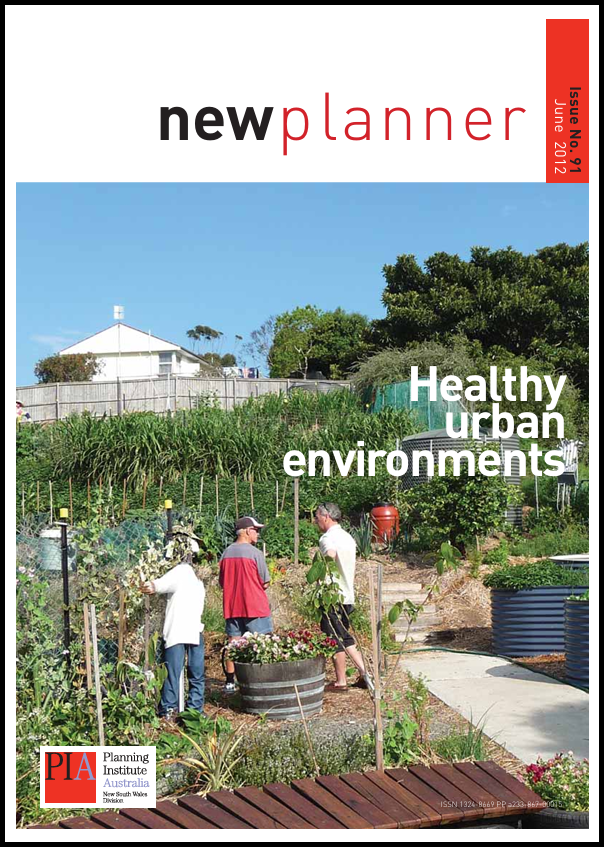
One of HBEP’s most impactful projects has been the 2010-14 NSW Research and Workforce Development Program on Healthy Built Environments. Funded by the NSW Ministry of Health, the study aimed to embed health considerations into planning practice and policy. This included building capacity within the public health and urban planning workforce, together with the development of evidence-based guidelines for creating healthier built environments. The Program launched a regular column in New Planner, the quarterly newsletter of the NSW Planning Institute of Australia, which for over a decade, significantly contributed to the education of practising planners about healthy built environments.
As well, the Program saw new teaching courses established, including the ongoing undergraduate class Healthy Planning. Dr Danny Wiggins, a Life Fellow of PIA who has been closely involved with the HBEP since its early days, contributed statutory planning and policy implementation expertise to the NSW Research and Workforce Development Program. He noted that the initiative benefitted significantly from HBEP’s broader work in research, education, and advocacy—particularly in promoting public health within planning practice.
"As a planning consultant and educator, ‘healthy planning’ is always on my agenda, as it is for all informed planning practitioners. We owe this to the groundbreaking work of Susan and HBEP."
A key HBEP accomplishment was a comprehensive review of healthy built environment literature. This examined the role of the built environment in supporting everyday healthy behaviours to reduce escalating rates of chronic disease. The review received the Planning Institute of Australia’s (NSW Division) ‘Cutting Edge Research and Teaching Award’ in 2012.
A Program evaluation highlighted HBEP’s instrumental role in bringing the disciplines of health and planning closer and bridging the gap between research and practice. The findings from HBEP’s projects have been widely used by policymakers, local governments, public health practitioners and planning professionals to inform urban development strategies.
Influencing practice and policy
Other particularly notable HBEP projects have included Planning and Building Healthy Communities, 2011-16. Funded by Australian Research Council, Heart Foundation, South-West Sydney Local Health District, and UrbanGrowth NSW, the study highlighted the critical importance of interdisciplinary collaboration in creating healthy built environments. As well, it provided a set of practical prompts for planners and designers.
HBEP has also joined consultants AECOM on a NSW Ministry of Health-funded project to update the Healthy Urban Development Checklist. The research provided scholarly and practice evidence that contributed to the Ministry of Health’s Healthy Built Environment Checklist.

HBEP research and advocacy contributed to the inclusion of a health objective in the NSW Planning Bill 2013. Progressed through building an alliance of industry and academic voices, this achievement underscored the Program’s ability to bridge research and policy, demonstrating the real-world impact of integrating health into urban planning frameworks.
Leadership recognition
The impact of HBEP work has been celebrated through prestigious commendations. Prof Susan Thompson was awarded the 2015 Sidney Luker Memorial Medal for her contribution to progressing healthy planning in Australia, joining a distinguished group of planning leaders who have made outstanding contributions to the field.
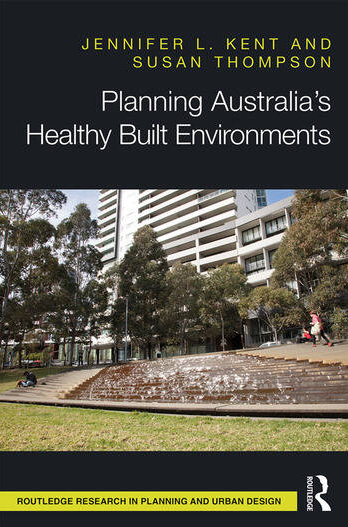
In 2020, the Planning Institute of Australia NSW awarded a commendation in the ‘Cutting Edge Research and Teaching’ category to Dr. Jennifer Kent (USyd) and Prof Susan Thompson for their book Planning Australia's Healthy Built Environments, further reinforcing the significant academic and practical impact of their work.
Looking forward: A call to action for healthier cities
As urban populations continue to grow, the need for health-conscious planning has never been more critical. Prof Susan Thompson’s work through HBEP serves as a powerful reminder that the places where we live directly impact our quality of life from infancy to the senior years. Moving forward, policymakers, planners, and communities must collaborate to ensure that supporting health and wellbeing of both humans and the planet, remains at the core of urban planning, policy and development.
By championing evidence-based strategies and fostering cross-sector partnerships, we can build cities that not only function efficiently but also enhance public health and well-being. The Healthy Built Environments Program has laid a strong foundation through its research, advocacy and education —now, it is up to us all to continue advocating for urban spaces that support and sustain healthy behaviours for generations to come.