This short article is part of our '20 high impact research stories' series. This has been assembled to mark two decades of the City Futures Research Centre 2005-2025. Each of the 20 stories revisits an influential research study completed over those 20 years, linking it with related Centre projects and outcomes. A brochure version of all 20 stories will be published later in 2025.
Rental housing in Australia has been facing intensifying stress marked by undersupply, unaffordability, and insecurity. As part of our engagement with this issue, the Centre has led critical research on ways to enable large-scale institutional investment in both market price and affordable rental housing. A series of influential studies led by Prof Hal Pawson and Hon Prof Vivienne Milligan have made key contributions to the national conversation on how to overcome longstanding barriers to expanding rental housing provision in this way.
Our 2019 Build to Rent (BtR) study, undertaken in collaboration with NSW Landcom, was the first large-scale independent research to explore the viability of a ‘mainstream market’ purpose-built rental housing sector in Australia. Thanks to a convergence of demographic shifts, consumer preferences, and international investor interest during the 2010s, as identified in the report, the research identified significant potential to spur the growth of a BtR sector, previously absent from Australia.
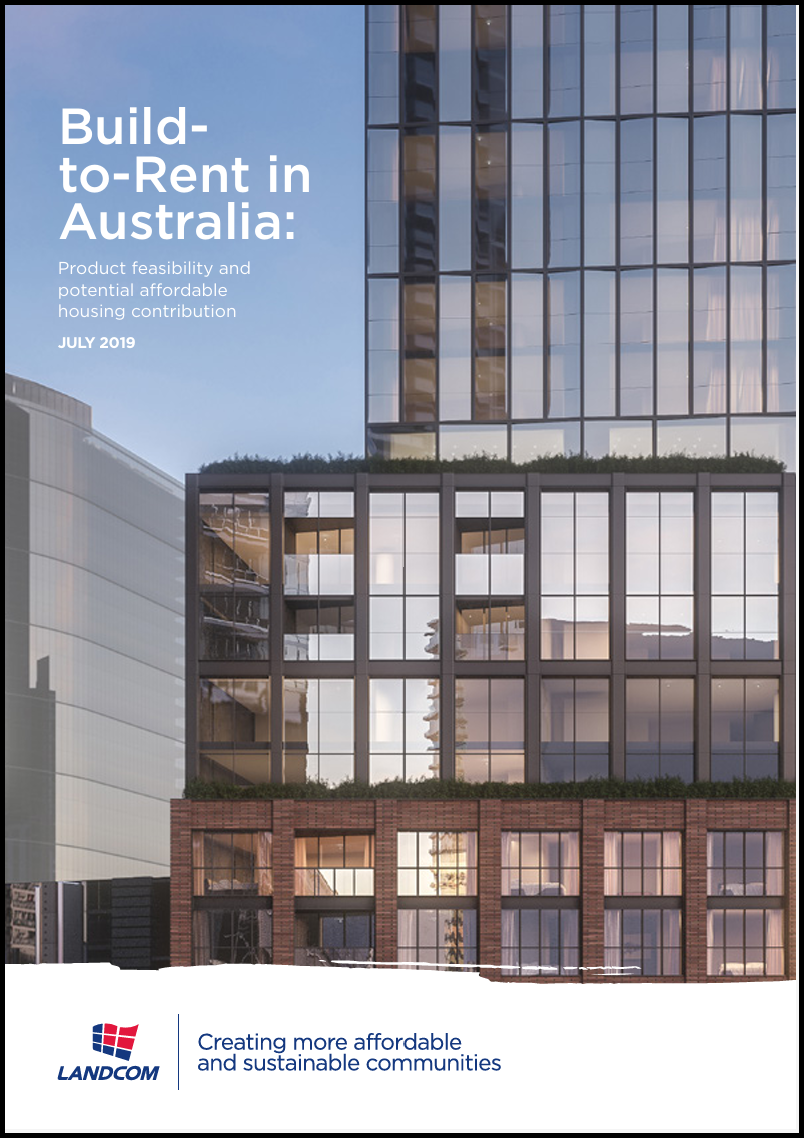
Led by Prof Pawson, with key contributions from Dr Chris Martin and Dr Ryan van den Nouwelant, the report argued that BtR has the potential to fulfil several important public policy objectives including widened housing diversity, enhanced build standards, and a better-managed, more secure form of private rental housing. Andrew Cooper, Executive General Manager Built Form at Landcom, reflected on the value of Landcom’s collaboration with CFRC in advancing Build to Rent research and policy:
Landcom’s partnership with the City Futures Research Centre was one of the first in depth analyses of Build to Rent in Australia. It provided meaningful insights into the opportunities and challenges in delivering innovative housing solutions. The research was informative in shaping Landcom’s Build to Rent strategy and planning for developments, helping unlock diverse, quality, secure and affordable housing for the people of NSW.
At the same time, marginal financial feasibility remained a major constraint, especially in high cost cities such as Sydney. The report highlighted the state and federal tax settings that were, at that time, compromising investment returns and therefore limiting sector growth prospects. Subsequently, however, adjustments to these regimes have significantly enhanced these prospects. In a 2024 article Prof Pawson explained the latest of these reforms.
Importantly, though, our 2019 report cautioned that the BtR model did not represent a silver bullet solution for Australia’s housing affordability stress. Financial feasibility modelling demonstrated that the not-for-profit provider model continued to represent the most cost-effective way to generate sub-market rental provision.
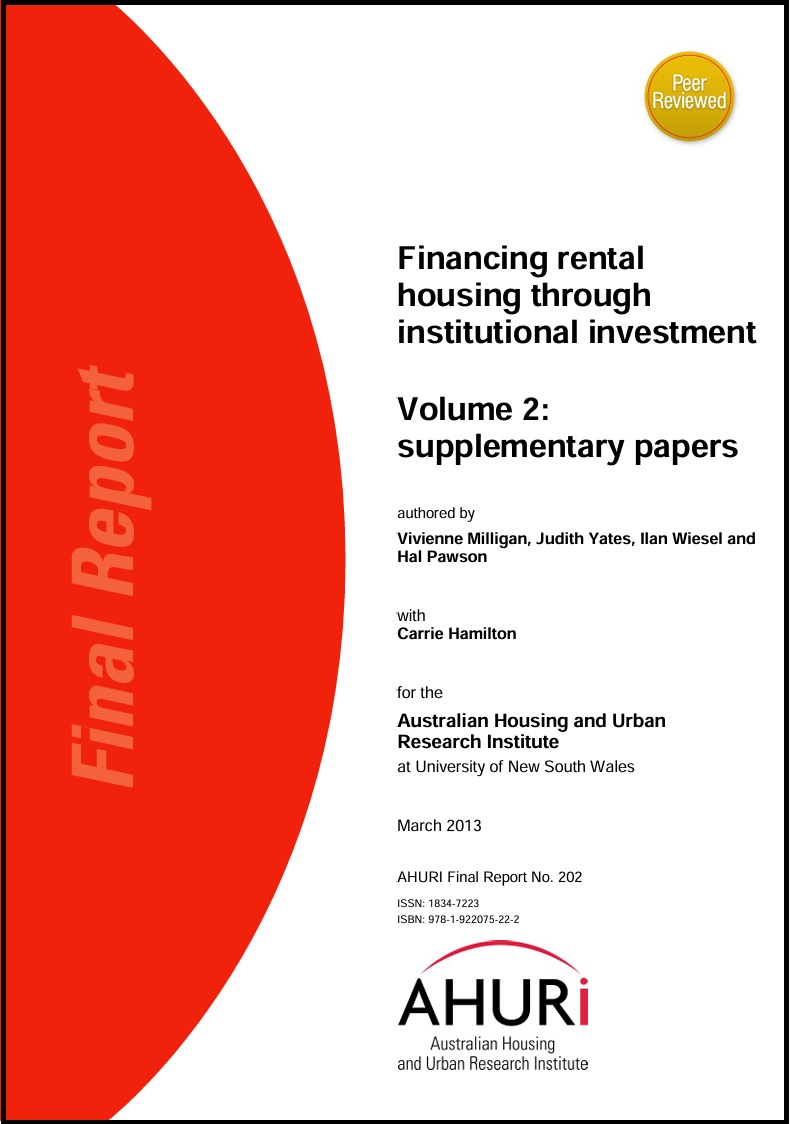
The Centre’s BtR research extended upon a large body of work by Hon Prof Vivienne Milligan more focused on institutional investment in affordable rental housing. In her landmark AHURI report Financing rental housing through institutional investment (2013), Prof Milligan drew on an expert Investigative Panel in identifying the untapped potential of Australia’s vast superannuation and managed funds sector, which manages long-term capital ideally suited to infrastructure-style rental investments.
In a well-cited 2013 journal article drawing on the research, Pawson and Milligan extended the discussion on barriers to institutional financing of rental housing, spanning both Australian and UK contexts. The article also highlighted recent changes in market conditions and investor sentiment holding out the prospect that such obstacles might be overcome. Further developing this story, the paper compared and contrasted relevant ‘policy reform’ recommendations proposed in the two countries to that end.

Along with another (2015) research report on the topic, these studies have importantly contributed to post-GFC policymaker and industry debate on how Australia can scale up affordable rental supply by tapping into billions of dollars in institutional capital. They have highlighted the case for shifting away from over-reliance on small-scale landlords, and towards a more sustainable rental ecosystem involving both for-profit and not-for-profit providers, underpinned by long-term investment and professional management.